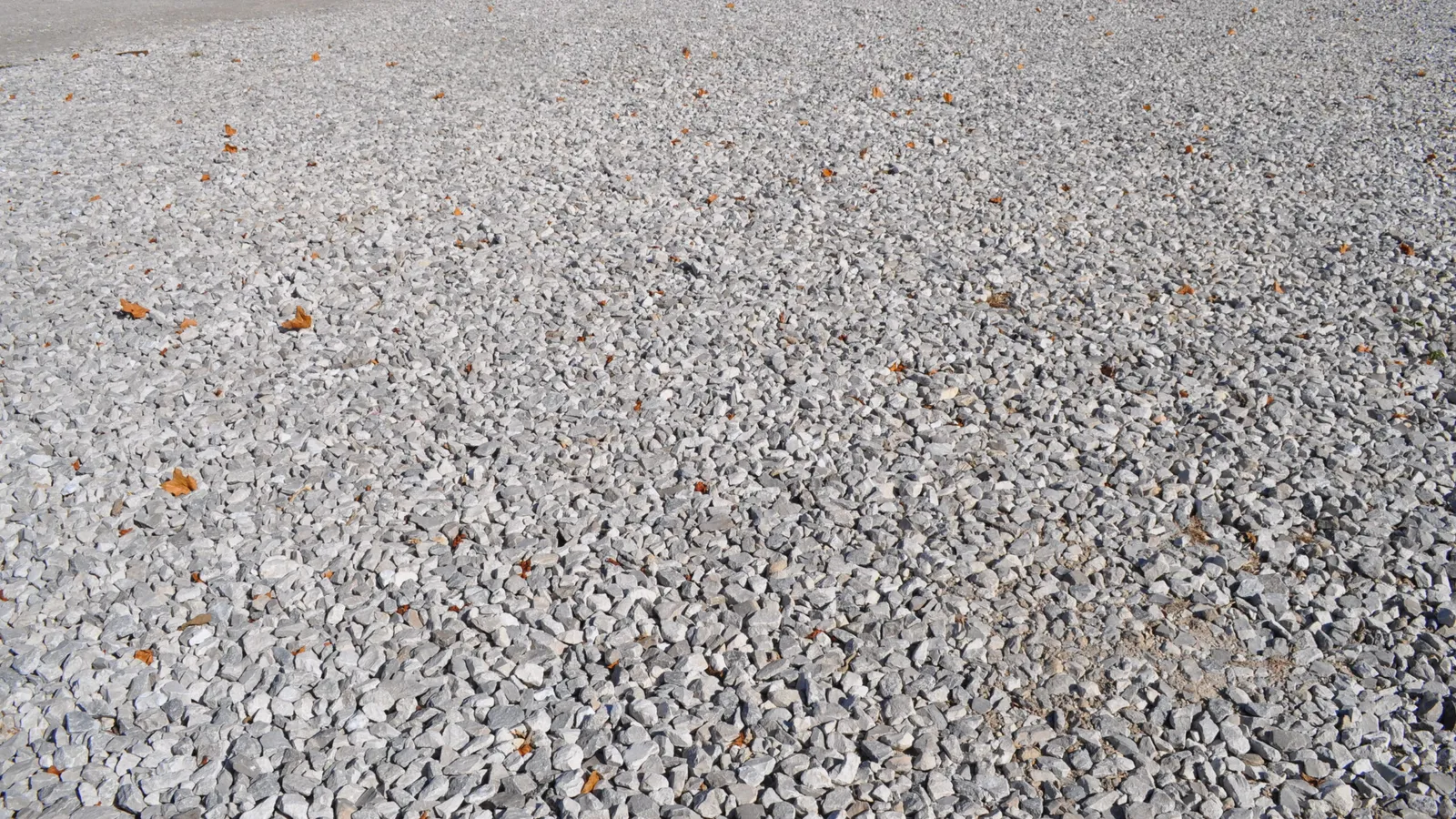
What is SB2 gravel, and is it the right base for a driveway?
In central Arkansas, SB2 means crushed base rock with fines, and 1.5 inch minus SB2 works as a driveway base. The name has no national standard behind it. One national cost guide uses SB2 for a coarser stone. Ask the supplier for the top size and whether the fines are in.
What is SB2 gravel?
SB2 is a name rock yards use. It is not a national ASTM standard, and its meaning can change from one quarry to the next. Around central Arkansas it points to crushed base rock with the fines left in. Fines are the small grit and dust that fill the gaps between stones.
One central Arkansas quarry sells its Class 7 base as SB-2, at 1.5 inch minus with fines. Minus means 1.5 inches is the top size. With fines means the small stuff stays in the mix. The quarry calls its base a well-graded crushed stone mix that packs well.
A cost guide can use the same name for other rock. One national guide prices sub-base SB2 in 1 to 4 inch sizes. It also says SB2 is called #3 stone. That is coarser rock, so its SB2 prices do not describe a 1.5 inch minus base.
So the name alone does not settle what shows up on the truck. Top size and fines decide how a load packs under new gravel driveways and pads.
Does SB2 mean the same thing as Class 7?
At that quarry, yes. Its product is named Class 7 Base (SB-2). Elsewhere, ask, since SB2 is not tied to one spec. Class 7 itself comes from the highway specs of the Arkansas Department of Transportation, or ARDOT.
In ARDOT’s Standard Specifications, Classes 7 and 8 must be natural rock crushed by machine. The rock must be quarried from a solid formation. Table 303-1 sets the sizes. All of Class 7 passes a 1.5 inch sieve, and 50 to 90 percent passes 3/4 inch.
From 3 to 12 percent of Class 7 passes the No. 200 sieve, and those are the dust fines. Class 8 is the 1 inch sibling. All of it passes a 1 inch sieve, and 65 to 100 percent passes 3/4 inch. Its fines band is also 3 to 12 percent.
That quarry sells Class 8 at 1 inch minus with fines, for the same uses as its Class 7. Read the ARDOT numbers as a highway spec. They are not a home driveway rule. They do give you exact terms to use with a supplier.
How does SB2 compare to crusher run, #57 and limestone?
The names overlap, so compare size and fines. Each row names where its numbers come from.
| Rock | Size | Fines or clean | What it is for | Market price per ton |
|---|---|---|---|---|
| Class 7 base sold as SB-2 (one central Arkansas quarry) | 1.5 inch minus | Fines in | Driveways, pathways, road bases, parking lots, pipe bedding | No price listed; ask the supplier |
| Limestone SB2 (an online aggregate marketplace) | Dust up to about 1.5 inches | Fines in | Driveway and road base | From $47.25 plus delivery, central Arkansas, November 3, 2026 |
| Sub-base SB2 (a national cost guide) | 1 to 4 inch sizes | Not stated | Sub-base | $25 to $30, national |
| Crusher run (same guide) | 3/4 inch to dust, also sold as #411 | Stone dust in | Base layer | $24 to $34, national |
| Road base (same guide) | 3/4 inch minus | Not stated | Under the top layer of gravel | $18 to $31, national |
| Crushed limestone (same guide) | Several sizes; the cheapest, #411, runs 3/4 inch to dust | Fines in at #411 | Not stated | $30 to $38, national |
| #57 stone (the same central Arkansas quarry) | 1.5 inch to 3/8 inch | Washed, clean | Retaining wall drainage, driveways, landscaping, drainage trenches | No price listed; ask the supplier |
Read the price column with care. The marketplace figure is a limestone listing before delivery, on one date. It is not a Hot Springs quote. The national figures come from a cost guide, and its SB2 price is for coarser stone.
SB2 and crusher run both keep their fines. In these rows the gap is top size, about 1.5 inches against 3/4 inch. The #57 stone sits at the far end. It is washed clean, and that quarry lists it for drainage work as well as driveways.
What rock is SB2 around Hot Springs?
That depends on the quarry. In Arkansas, the harder rock formations are confined to the Ouachita Mountains, the Arkansas Valley and the Ozark Plateau. The Gulf Coastal Plain holds little hard stone suitable for quarrying.
Sandstone is widely spread through the Ouachitas and commonly used for aggregate. A 1999 state geology report says the Hot Springs Sandstone has produced high quality stone around Hot Springs. Nepheline syenite, an igneous rock, crops out in central Arkansas. The Arkansas Geological Survey says one quarry is producing it near Bryant.
Limestone is scarcer here. It is widespread in the Ozark region, while that 1999 report lists only minor quantities in the Ouachitas. So advice written about limestone base may not describe the load that arrives. Limestone SB2 does sell in central Arkansas, as the marketplace row shows.
One central Arkansas quarry says its SB-2 is like limestone base but harder, less dusty and less prone to tracking. That is the quarry’s claim about its own product.
Does SB2 work alone or under a top course?
SB2 is a base rock first. A top course is a layer of surface gravel laid over the base. One central Arkansas quarry lists driveways first among its SB-2 uses and calls it an excellent wet weather product.
The Federal Highway Administration’s gravel road guide adds a caution. It says base gravel generally has larger stone and a very small share of fines. Used as a surface, that material will not form a crust to hold it together.
The guide says very fine particles bind gravel so a road can form a crust and shed water. Surface gravel needs more of them than base does. Its example spec, from one state, allows 3 to 12 percent fines in base, the same band as Class 7. Surface gravel there runs 4 to 15 percent, sometimes raised to 8 to 15.
That matters on a sloped driveway. Hot Springs gets about 58 inches of rain a year, by NOAA’s 1991 to 2020 normals. On a slope that water runs down the drive, and it moves stone that is not bound.
The guide calls a base with surface gravel on top an ideal build. The top layer should be at least 3 inches deep. It notes that build may not be affordable, but serves very well under heavy truck traffic.
Used alone, SB2 is a base rock doing a surface job. On a steep drive, or one that carries trucks, price a top course too.
Shape comes first either way. The federal guide highly recommends about 1/2 inch of crown per foot, roughly 4 percent, for gravel roads. It warns against going past 6 percent. On a 12 foot driveway, that crown puts the center about 3 inches above the edges.
Its general rule for each layer is at least twice the top stone size. For a 1.5 inch minus base, that means at least 3 inches a layer.
We cut the drive to grade first and dig out the soft spots. Then the rock goes on in layers, shaped with a crown. The cutting and shaping is grading and site prep work.
How do you figure yards and tons of SB2 for a driveway?
Multiply length by width in feet, then by depth in inches, and divide by 324. That gives cubic yards. A driveway 100 feet long and 12 feet wide takes about 15 cubic yards at 4 inches. At 6 inches it takes about 22 cubic yards.
To turn yards into tons, you need a weight per yard. An online aggregate marketplace lists limestone SB2 at 2,780 pounds per cubic yard. At that density, the 4 inch driveway takes about 21 tons, and the 6 inch one about 31.
One national cost guide says a cubic yard holds 1.4 to 1.5 tons of stone. That range gives about 21 to 22 tons at 4 inches and 31 to 33 tons at 6 inches. Rock weights vary, so ask your supplier for its own number.
That marketplace listed limestone SB2 in central Arkansas from $47.25 per ton plus delivery on November 3, 2026. The national guide puts delivery at $10 to $25 per ton. It puts spreading at $12 per yard or $46 per hour. It also says orders of at least 17.5 to 20 tons get the cheapest delivery rates.
Those are rock and delivery numbers only. Full driveway prices are in our gravel driveway cost guide.
What should you ask before you order a load?
Start with the top size, in inches. SB2 can mean 1.5 inch minus at one quarry and 1 to 4 inch stone in a national guide. Then ask whether the fines are in. Washed stone has none, and fines are what help bind a base.
Ask what rock it is, since advice written for limestone may not fit the load. Ask whether it sells by the ton or the cubic yard, and what a cubic yard weighs. Ask, too, whether a depth means loose or packed.
Then ask what the price covers. One national cost guide says most deliveries leave out spreading on site, so a load may stop at a pile. Around Hot Springs, our dump trucks handle gravel delivered and spread.
Soil and traffic set how deep the rock goes, and slope sets the shape. For a gravel driveway or pad around Hot Springs, Scott Bankhead Demolition gives a free on-site estimate. Call (501) 617-1511 or tell us about your driveway.