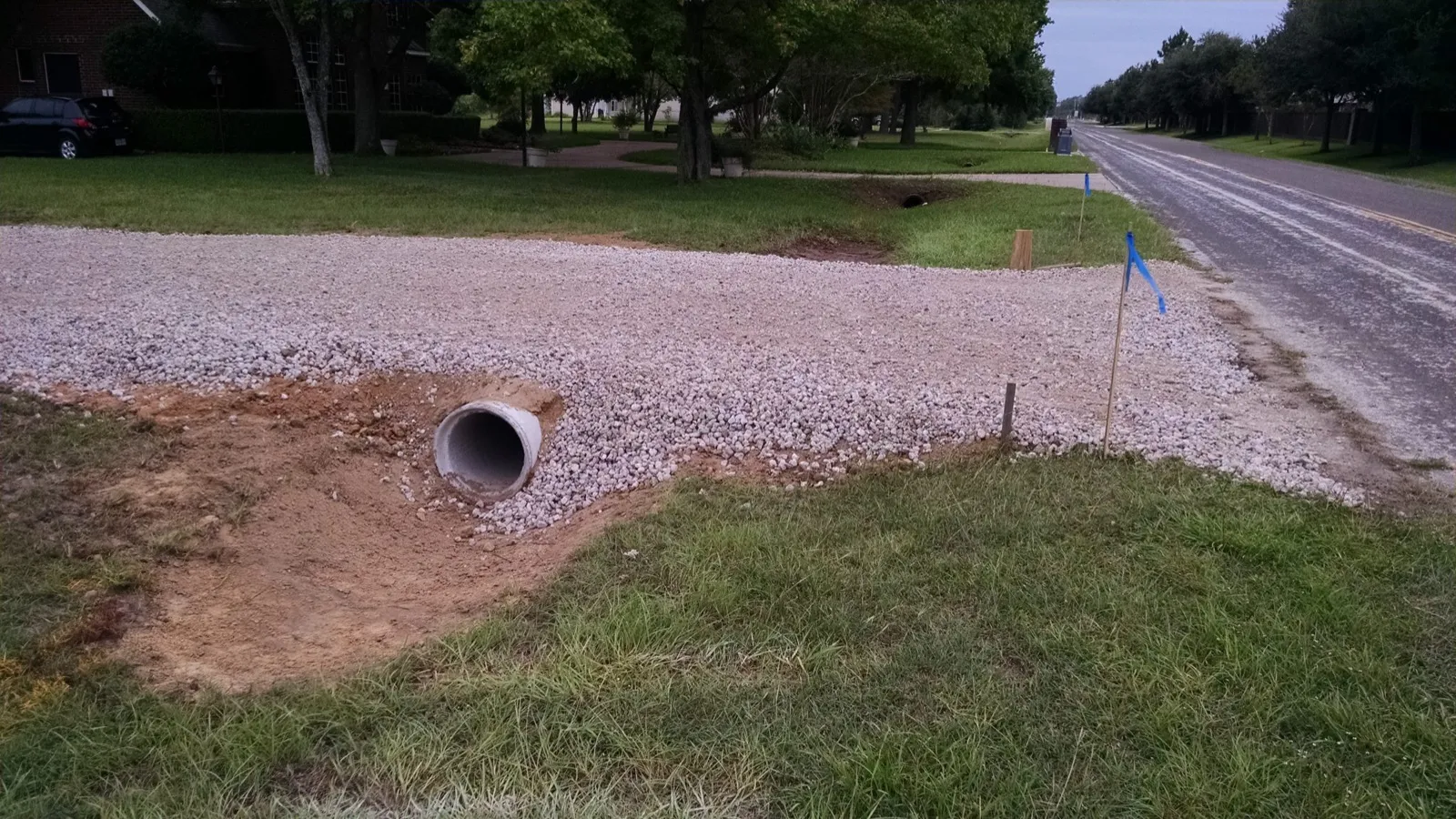
How much does a driveway culvert cost in Arkansas?
A driveway culvert costs $1,000 to $9,000 to install, with an average of about $4,500, says Angi’s July 2026 guide. HomeGuide puts culverts or drains on a gravel driveway at $500 to $2,000. On a state highway, Arkansas rules call for a pipe at least 18 inches across and 24 feet long.
What does a driveway culvert cost installed?
Angi updated its driveway culvert guide on July 8, 2026. For professional installation, it says you can expect to pay between $1,000 and $9,000. The average cost is about $4,500.
Angi says the price depends on the length and type of pipe and your driveway material. It usually includes resurfacing the part of the driveway that sat on top of the pipe. Stone, rock or sod to line the ditch may or may not be included.
HomeGuide’s figure is lower. Its gravel driveway guide says installing culverts or drains costs $500 to $2,000, depending on your property’s needs. HomeGuide lists that as one cost of building a new gravel driveway.
The two guides price different jobs. HomeGuide’s figure rides along with a drive that is going in anyway. Angi’s covers the culvert job on its own, usually with the drive resurfaced over the new pipe. Our gravel driveway cost guide covers the rest of a new drive’s budget.
Scott Bankhead Demolition handles driveway culvert installation around Hot Springs with tracked excavators and dump trucks. Estimates are free and on site, where the ditch and the drive set the number.
What does culvert pipe cost by material?
Angi says culvert pipes are usually aluminum, galvanized steel, plastic or concrete. It lists prices for plastic and metal pipe 24 inches across in a 20 foot length. The table sets those pipe prices beside the installed figures from both guides.
| Cost line | Price | Source | What the source says |
|---|---|---|---|
| Plastic pipe, 24 inch by 20 feet | $700 | Angi | Lightweight and easier to install, better suited for low-traffic areas |
| Aluminum or galvanized steel pipe, 24 inch by 20 feet | About $800 | Angi | Galvanized steel suits high traffic but is prone to rusting, which can create weak spots |
| Concrete pipe | Not priced | Angi | Durable and ideal for high traffic, but the heavy material requires more manpower |
| Culverts or drains on a gravel driveway | $500 to $2,000 | HomeGuide | Depends on your property’s needs |
| Driveway culvert, professionally installed | $1,000 to $9,000, about $4,500 average | Angi, July 2026 | Usually includes resurfacing the drive over the pipe |
Each material gives something up. Angi says aluminum and plastic will not rust, but neither is as strong as steel. All four can be cut to size, though concrete pipe takes extra machinery and expertise.
Compare the pipe with the whole job. A 20 foot pipe at $700 to $800 sits well under Angi’s $4,500 average for an installed culvert. Length counts too. On a state highway, Arkansas sets a 24 foot minimum, longer than the pipe Angi priced.
What size and length does the pipe have to be?
The pipe size is the road owner’s call. On a state highway, that is ARDOT, and its access driveway rules set the floor. On a Garland County road, the county sets the requirements.
The state drainage rule is 27 CAR 94-306. Drainage in highway side ditches may not be altered or impeded. The engineer approves the size of the opening, the length and other design features. In all cases, the pipe is no smaller than 18 inches in diameter, or the equivalent.
Pipe culverts must be corrugated metal, reinforced concrete pipe or other ARDOT-approved pipe. Each one runs at least 24 feet, with no hazardous headwalls or other hazards built on it. A run longer than 100 feet needs a drop inlet or other cleanout. Plastic is not named, so ask ARDOT whether it counts as approved pipe.
The property owner may be required to provide a drainage study. If one is required, it is a separate line in the budget. A driveway may not be built with a swale type ditch for drainage. The exception is when there is no other choice and the engineer approves it.
The paperwork comes before the dig. ARDOT says an access driveway permit is required whenever a home or business needs access to a state highway. Under 27 CAR 94-102, the request to build or rebuild a driveway goes to the district engineer.
The district engineer then sets up a meeting with a district office representative to go over the work. The permit form goes in with any necessary drawings, plus a deposit or bond if one is required. No work starts on state highway right of way until the permit is issued.
On a Garland County road, call the county Road Department at (501) 767-9174 first. Garland County says anyone building driveway access on county or state right of way must call about the installation requirements. Outside Garland County, start with whoever maintains the road. Scott Bankhead Demolition sets the pipe to the size and length the road owner calls for.
Why does culvert size matter around Hot Springs?
Rain is the reason. NOAA’s 1991 to 2020 climate normals put Hot Springs at 57.96 inches of rain a year. May is the wettest month, at 6.51 inches.
Roadside ditches carry that runoff past every drive that crosses them. Angi says that without proper drainage from a culvert, water can build up at the end of your driveway. A crushed or undersized pipe floods the drive at the road.
Weight is the other test. Angi says a culvert that was not installed correctly might not hold the weight of your car. It can buckle or crack.
Setting the pipe on a firm bed and building the drive back over it is excavation and dirt work. Our tracked excavators handle the dig and the backfill.
Should you repair or replace an old driveway culvert?
Angi’s answer is usually to replace it. It says a rusted-out or damaged culvert is generally not worth repairing. A replacement takes less time and will likely last longer than a repair.
Angi says the property owner is responsible for driveway culverts. In most cases, it adds, the homeowner maintains and repairs them, though local laws vary.
The old pipe has to go somewhere, and so does any dirt that does not go back in. Arkansas’s solid waste rules count debris from road construction and repair as construction and demolition waste. The listed materials include metal, concrete, and fill such as earth, gravel and stone. That waste falls in Class 4.
Garland County’s published rate for Class 4 waste is $32 per ton, with a $15 minimum charge. Class 4 waste from outside Garland County costs $50 per ton. A steel pipe kept separate from other debris is a different case: the county’s 2025 fee schedule lists scrap iron and steel at no charge. Our dump truck hauling takes the old pipe and debris off the site.
On a gravel drive, the stone goes back over the new pipe. A worn drive can be rebuilt as a gravel driveway in the same job.
Do you have to call 811 before a culvert goes in?
Yes. Arkansas law requires you to contact Arkansas 811 before any digging or demolishing work. Member utilities locate their lines within two full working days.
Utility companies will only locate their own lines. Anything behind the meter belongs to the property owner and is considered a private line.
Once the lines are marked, the ticket gives you ten working days from the call-in day to start. A job not finished within 20 working days needs a renewed ticket. On a state highway, the ARDOT permit also has to be issued before any digging in the right of way.
Pipe size and the drive over it set the real number. Scott Bankhead Demolition gives free on-site estimates on driveway culverts around Hot Springs. Call (501) 617-1511 or ask for a free driveway culvert estimate.